

Late talking in Toddlers: Is it normal?
What is a late talker?
A late talker is a child who speaks fewer than 50 words and does not put 2 words together by age two. Children typically acquire their first word by 12 months and are putting 2 words together by 2 years. While 70 – 80% of late talkers do catch up on their own, we cannot determine which children might catch up to their peers. Even of the 70-80% of children who 'catch up' to their peers, 20-30% of these children will continue to have significant difficulties with language development in areas such as vocabulary, grammar, literacy and listening comprehension. This is why early assessment & intervention is essential for supporting children's language development.
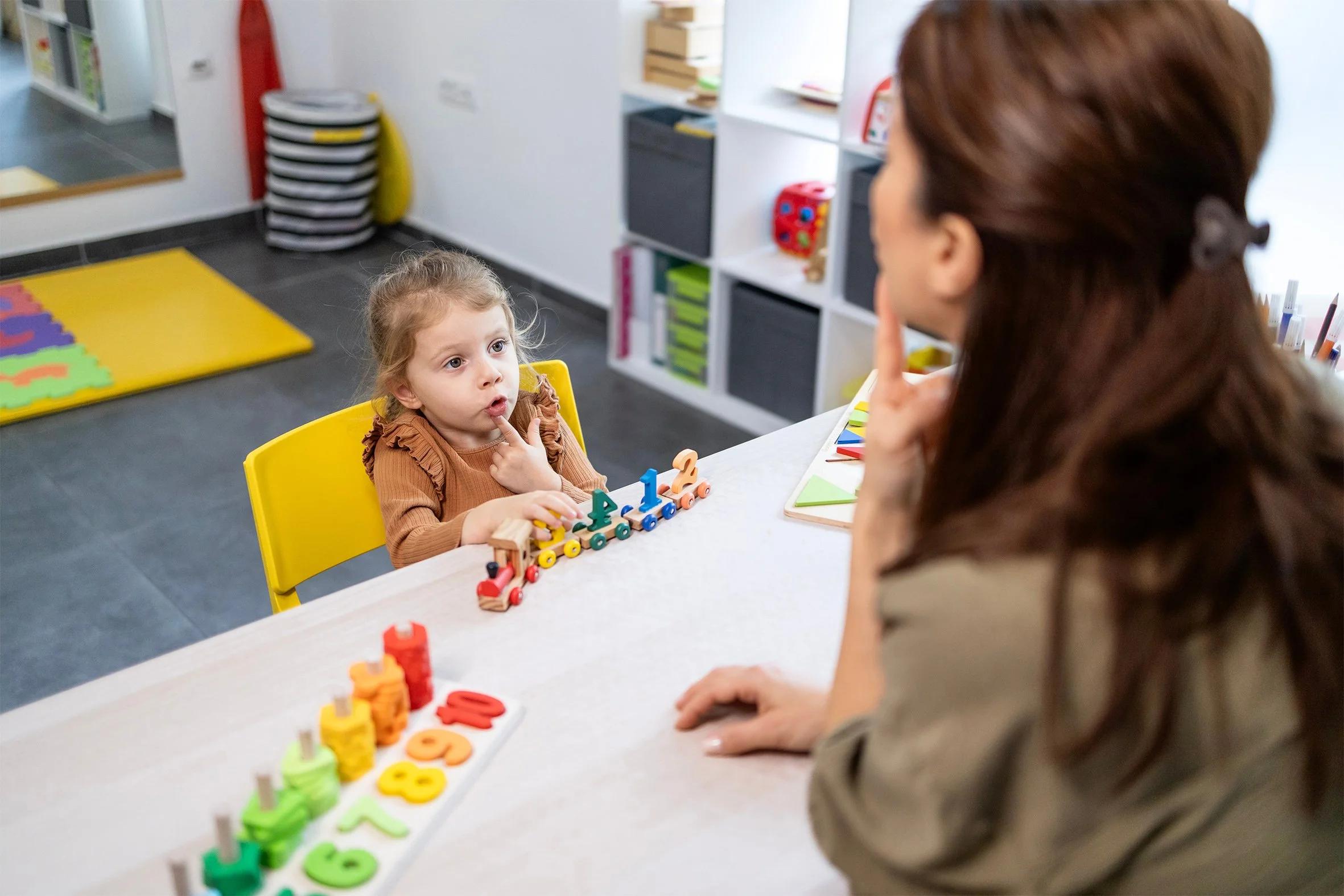
What do typical speech and language milestones look like?
At 12 months, children can usually understand about 10 words, respond to their name, recognise greetings and gestures (I.e., saying 'hi' and pairing this with a wave) and make eye contact. Regarding speech, children usually produce their first word by this age, but they may continue to babble and copy different sounds.
At 18 months, children can understand up to 50 words and some short phrases, follow simple one-step instructions, point to familiar objects when named and point to some pictures in familiar books. They can also usually say 6 – 20 single words, copy lots of words and noises and use objects in pretend play.
At 2 years, children can follow simple two-part instructions, respond to simple ‘Wh-’ Questions(what, where, who), point to several body parts and pictures in books and understand when an object is 'in' and 'on' something. By this age, children say more than 50 single words, begin putting two words together, start using their intonation to indicate a question, use a variety of vowels and consonants and begin to use possessive nouns/pronouns (mine/my). Speech is roughly 50% intelligible at this age.
At 3 years, children can follow more complex two part instructions, understand the concepts of 'same' and 'different', sort items into groups when asked (I.e., toys vs food) and recognise basic colours. Children are beginning to say 4-5 word sentences, use a variety of words for names, actions and descriptions, ask wh- questions, talk about something in past tense (it is expected children may use '-ed' for most verbs, I.e., 'he go-ed there') and engage in a conversation (it is typical for children to deviate off topic during conversation). Speech is about 75% intelligible at this age.
At 4 years, children answer most questions about daily tasks, understand most wh- questions, understand some numbers and begin to develop phonological awareness that some words start or finish with the same sound. Children use words such as 'and', 'but' and 'because' to make longer sentences, describe recent events, ask questions using personal pronouns and can name numbers and colours. Speech is about 90% intelligible at this age.
Language delay or speech delay: what is the difference?
It is important to distinguish between speech and language. Language refers to our understanding of what people say to us and how we communicate with others – language can be nonverbal, verbal, gestural (pointing, waving), written and signed.
Language skills also encompass how children utilise play skills, this includes:
Simple, imitative play (pretending to eat or drink, using a comb or talking on a toy phone): developed by 12-18 months
Pretend play (when children use objects and/or toys to represent something outside their actual reality, I.e., using play money or a toy scanner to buy groceries): developed by 18-24 months
Role-playing simple scenarios (I.e., pretending to be a parent, using objects to represent others, I.e., using a block as a car): developed by 2-3 years
Children who are late talkers may also show delays in their play skills, as language and verb growth is required for increasing play complexity and storylines.
Speech only refers to the verbal expression of language and includes articulation. A child with a speech delay may talk in full sentences and provide details about their day, but this may not all be intelligible due to speech errors. Conversely, it is not uncommon for children to concurrently have a speech and language delay.
A speech delay is when a child's speech clarity is impacted by speech errors (I.e., 'wun' instead of 'run'). Depending on the child's age, these differences may be expected as part of their development (I.e., children will usually not acquire the 'r' sound until they are 6 years old).
Late talking is classified as a language delay. Language delays may occur on their own, or alongside other conditions such as Autism Spectrum Disorder, hearing loss, Intellectual Disability or Developmental Language Delay.
Does bilingualism cause speech or language delay?
It is important to stress that bilingualism does not cause a speech or language delay. Bilingual children should still meet the same overall communication milestones as monolingual peers.
Bilingual children may have a smaller vocabulary in each individual language, but their total vocabulary across both languages is on par with their monolingual peers.
If a child is stronger in one language more than the other at home (I.e., Mandarin is spoken more at home than English), it is not uncommon for children to undergo a 'silent period' when they enter environments where the language they are least familiar with is predominant. This period is normal and not indicative of a language delay or disorder. During this time, children listen and process the new language but do not speak it. The exposure and consistency of the new language will influence how long the silent period lasts (I.e., attending a primarily English-speaking daycare for x1 day a week vs x4 days a week). This period can last anywhere from 2 weeks to 6 months.
Strategies to support early language development at home
Providing children with rich language modelling provides frequent opportunities for language exposure and acquisition. Some strategies you can use to promote language and speech development at home include:
Encouraging imitation of sounds and gestures
Reading to your child – encourage your child to look while you read from left to right and point out corresponding words to pictures
Build on your child's everyday speech – if your child points at a dog and says 'dog', expand on this utterance, I.e., 'yes, that is a big brown dog', 'lovely pointing, the dog is barking'
Engage in self-talk (talking about your actions in everyday activities or during play) and parallel talk (talking about your child's actions) to build their language knowledge
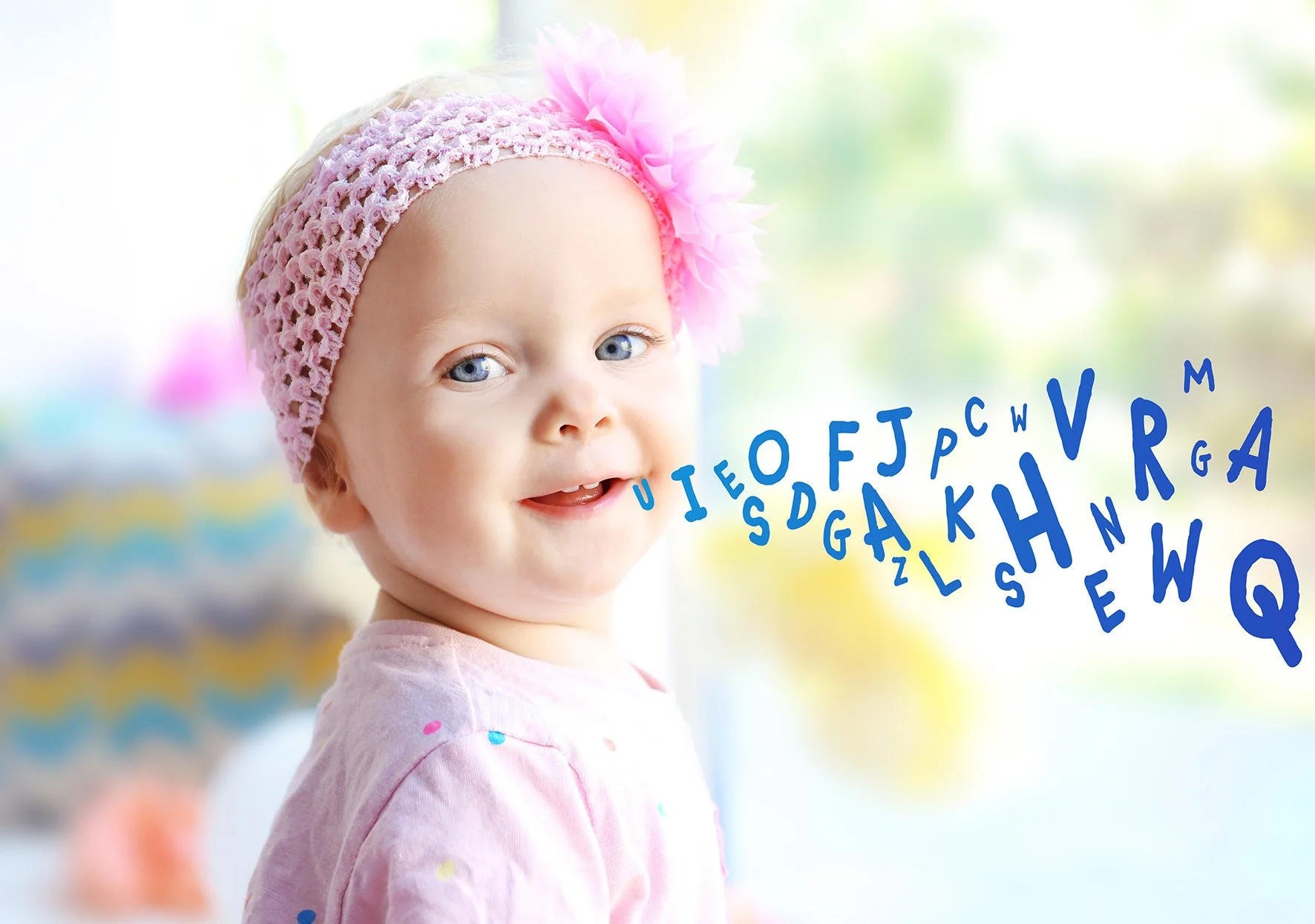
When should you see a speech pathologist?
If you are concerned about your child's language development, it is best to consult a Speech Pathologist to assess for presence of a language delay, disorder, or even to gain baseline information to monitor for improvements in language acquisition. Early intervention makes a significant difference to long-term language outcomes.
You are recommended to seek a Speech Pathology Assessment if your child:
Has no words by 12 months
Is not pointing or waving by 12 months
Has fewer than 10 words by 18 months
Has lost speech or language skills at any age
Is difficult to understand (even by family) after age 3
Does not understand what you say to them
Has limited eye contact, social engagement or pretend play
Shows frustration when trying to communicate
Speech pathology support in Caringbah
Wondering whether your child may be a late talker?
Contact our team at Caringbah to request an appointment.