
Telehealth
Online Therapy
Jump to a section

Care without the commute
Getting to an appointment can involve more than finding an hour in your diary. There may be work or study to rearrange, caring responsibilities to manage, or a journey that takes more energy than you have that day.
Telehealth can make accessing support more manageable. Still, meeting a clinician through a screen may feel unfamiliar. You might wonder whether conversation will flow naturally, what an online appointment involves, or how sessions could fit your circumstances.
At Home Psychology and Speech Therapy, we offer online psychology and speech pathology services for adults, teenagers, children, couples and families. Our team can discuss the support you are looking for and which appointment options may be suitable.
What is telehealth?
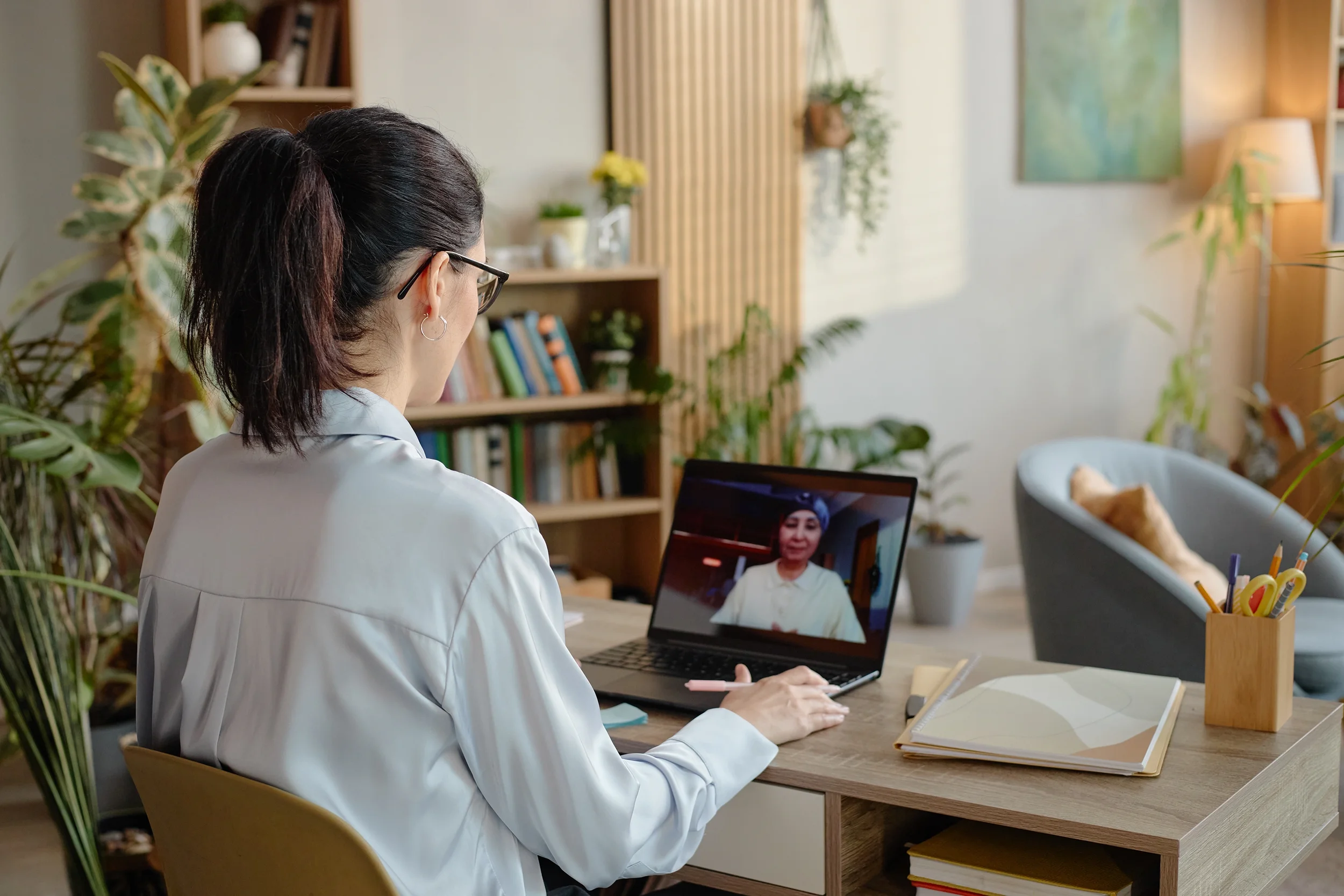
Telehealth is a therapy session without the trip: you meet your clinician by phone or video from your own space. Video sessions let you see and hear each other, talk things through and work on activities together. Phone sessions can suit conversations that don’t need a screen.
Sessions are with the same psychologists, speech pathologists and behavioural support practitioners you’d see at our Caringbah clinic or on a home visit. For video, there’s nothing to download. Before your appointment you’ll receive a secure link that opens in a web browser on your computer, tablet or phone.
Psychology
An online psychology session is a conversation, much like one in the clinic room. You might talk through what’s been happening, notice patterns in your thoughts and feelings, and practise strategies for situations you’re facing.
That could mean unpacking a hard moment from the week, working through study stress or changing friendships, or exploring relationships and family life. Parents and carers can also use sessions to talk about supporting someone in their care.
Some clients also work with our Psychology Allied Health Assistants, who can meet online between psychology sessions to help put strategies into practice in everyday life. If talking through a screen feels awkward at first, say so. It’s useful for your psychologist to know, and they can adjust how sessions run.
Speech Therapy
Online speech therapy can work on speech sounds, language, fluency and the communication skills people use every day.
For adults, that might mean practising strategies for work or social situations. For children, sessions often use books, games and play, with the speech pathologist guiding activities or coaching a parent or carer to practise alongside them. Working from home also shows how strategies fit into everyday routines.
Sessions are shaped around each person’s goals, communication preferences, sensory needs and who’s available to help. Some assessments may need to happen in person, and our team can let you know.
Is telehealth right for me?
Some people find it easier to open up from their own couch. Others like having a room that’s separate from home. Neither is wrong, and you don’t need to know which you are before getting in touch.
We’ll chat about your goals, any communication or access needs, and who’ll be joining, so we can work out together whether telehealth suits. Some activities and assessments do work better in person, and if a screen isn’t the right fit, you’re welcome to see us at our Caringbah clinic or ask about home visits.
If it’s hard to talk privately at home, or online sessions start to feel tiring or just not right, let us know. What suits you can change, and we’re happy to change with it.
How it works
Step 1: Get in touch
Send us a message or give us a call. Tell us what you’re looking for, and who you’d like to see if you’ve browsed Our Team.
Step 2: Book a time
We’ll match you with a clinician who suits your needs and schedule, and book you in. Returning clients can book through the Client Portal.
Step 3: Check your email
You’ll receive a confirmation with your secure video link, plus any forms to complete before your session.
Step 4: Get set up
Find a quiet, private space and test your camera, microphone and connection. The tips below can help.
Step 5: Join your session
Open your link a few minutes early and you’ll wait in a virtual waiting room. Your clinician will get to know you, chat about what’s brought you in, explain confidentiality and answer any questions.
Step 6: Plan what’s next
Before you finish, you’ll work out your goals and how often to meet. You can keep going online, mix in some time at the clinic, or adjust things as you go.

Preparing for your appointment
A little preparation helps sessions run smoothly. The Australian Psychological Society suggests a reliable connection, a private space and a time with fewer distractions.
Before the day
Mention any access needs. Let us know early about communication supports, interpreters or anything tricky with technology.
Gather what you’ve been asked to bring. This might be notes, therapy resources, communication aids or materials for an activity.
On the day
Check your device. Test your camera, microphone and sound, and charge it beforehand. If your internet is patchy, sit closer to the router and pause other streaming or downloads.
Find a private spot. Choose somewhere quiet where you won’t be overheard. Headphones can help with sound and privacy.
Set up your camera. Put it at eye level, with everyone taking part in view. Moving the video window to just below the camera makes eye contact feel more natural.
Light your face. Sit facing a window or lamp rather than with bright light behind you.
Get comfortable. Have a glass of water or a cuppa nearby, and wear whatever feels comfortable.

Frequently Asked Questions
-
For some treatments and groups, research suggests similar outcomes. A 2024 review found little difference between therapist-guided remote and in-person cognitive behavioural therapy in adults. This approach explores connections between thoughts, feelings and behaviour.
Speech pathology research also supports telehealth for some interventions, although the evidence base is smaller. That said, everyone’s different. We’ll chat with you about whether telehealth feels like a good fit, and if it’s not working for you, we can look at seeing you in person instead.
-
Your clinician can discuss adaptations that may help, such as communication supports, movement breaks, different activities or involvement from a support person.
For younger children, sessions may include play or parent coaching. Teenagers may need a balance of family involvement and private conversation. The approach should reflect the person’s needs, preferences and goals.
-
Where appropriate and with consent, other people may be involved in an appointment. The arrangement depends on the service, the goals of therapy and everyone’s privacy.
If you are seeking couples therapy or another shared appointment, ask our team which telehealth options are available and how participation would be arranged.
-
Ask how the platform handles information, who may be present, and what confidentiality means for your appointment. You can also ask whether any recording is proposed. Australian virtual care guidance emphasises privacy and informed consent for care from registered practitioners such as psychologists.
-
Follow the backup plan agreed with your clinician. This might involve reconnecting or contacting the clinic. Your clinician can advise whether continuing by phone is suitable or whether another arrangement is needed.
-
You can contact our team to discuss options. A referral is not required for privately funded speech therapy at Home Psychology, but Medicare-funded care requires the relevant referral and eligibility arrangements. Check what documentation is needed when booking.
-
Eligible psychology appointments may attract rebates through Better Access, commonly with a Mental Health Treatment Plan and valid referral.
Speech pathology uses separate pathways, including eligible services under a GP Chronic Condition Management Plan. Ask your GP and our team what applies; a rebate may cover only part of the fee.
-
We work with self-managed and plan-managed NDIS participants. Funding must meet NDIS requirements and match the supports in your plan.
Private health benefits depend on your policy and claiming rules. Ask your insurer specifically about telehealth with your clinician, and confirm arrangements with us before booking.
Already a client? Book your next session through the Client Portal.
Whatever has prompted you to explore therapy, a conversation can help clarify the support you are looking for and how it might fit into your life.
Get in touch with us to discuss your goals, ask questions and find out whether telehealth would be suitable.

